
May 1, 2026
The Mirror Moment
Picture this. The year? 1990. The place? My childhood home in Niagara Falls, Ontario. The scene? A full bag of strawberry wafer cookies was strewn across the floor.
Busted.
My mom had come downstairs to find me sitting in front of the television, surrounded by the evidence. (80s babies, do we remember these cookies or WHAT? I can still smell that sickeningly sweet strawberry scent and the special sour tang.) I had just eaten lunch and definitely had not asked permission. My mom told me I could not eat the whole bag and took them away. I responded by throwing them on the floor. She sent me to my room for a timeout.
“FINE”, I said, “I will!”
Here is the thing, though. Subconsciously, though, I was excited. There is nothing more delicious than heading to your room, looking into the mirror, and watching yourself cry. The drama. The feelings. The waterworks. It was pure theatre, and I was the star. My mom did not come in with the cookies, telling me everything was okay. And eventually, I stopped crying.
I share this story because it turns out I am a bit of a glutton for punishment. Who else would sign up for a job that coaches parents through a process that includes crying babies? Me, apparently. And our whole team.
It is genuinely our job to talk openly about crying, to help you frame it in a way that is true and that helps you understand and tolerate it. On every discovery call, we do not skirt around the tears–we need to talk about them.
Here is the framework we come back to again and again. Think about the movie Inside Out. In that film, Riley has a whole cast of emotions running the switchboard at any given moment. Whatever emotion is in charge shows up on the outside. Joy at the controls means Riley looks joyful. But behind Joy, the rest of the crew is always there. Anger, Fear, Sadness, Worry. They are all present and communicating.
Sleep training works the same way. When you make a behaviour change, like moving away from rocking your baby to sleep and toward independent settling, Anger is going to be at the switchboard for a while. That is just how it works. Your baby will show you outwardly that they do not love this change and would prefer the old method. We cannot skip that part. What we can do is find ways to respond to it thoughtfully.
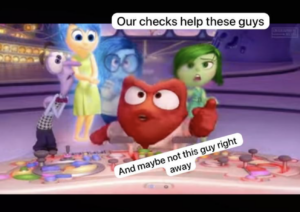
Just like the emotionally accurate world of Inside Out, we encourage parents to practice responsive interventions throughout the process. Going in to talk to your baby, offering a hug, a kiss, a reassuring voice. These things matter. Your baby’s whole inner crew is watching and taking notes. Every time you show up, the other parts reassure Anger that things are okay.
This is exactly why we practice responsive sleep training at Baby’s Best Sleep, whether that means sitting in a chair beside your baby or leaving the room to check in. The method is chosen for its responsiveness. We also make sure that parents continue to respond to their babies based on good evidence.
Sleep training is not leaving your baby to cry alone for hours. Sleep training is not ignoring your baby. Sleep training is about responding intentionally and giving your baby the space to learn a physical skill, the ability to settle back to sleep on their own, while cheering them on with a hug and kiss as needed.
Most of our clients see a significant reduction in crying in under 24 hours. Most are bored of us by week two.
Here is what I know for sure. Crying sucks. It means feelings. It means change. It means your baby is doing exactly what babies do when something is different, and they want the old thing back. Trust the process. Trust your baby. THE CRYING STOPS!
And if YOU need to go cry into a mirror for a few minutes, I completely understand. It works.
Whether you’re at the beginning stages of sleep training with your baby or you just want to improve your mental health as a parent, the sleep consultants at Baby’s Best Sleep are here to help.


© 2026 Baby's Best Sleep.
All Rights Reserved.

© 2026 Baby's Best Sleep. All Rights Reserved.