
February 1, 2026
I wanna talk about monitors…and trackers…and wearables
The year was 2014, and my cousin gifted me a video monitor for my baby shower. It was not on my registry, but I thought it was SO COOL. And honestly, it was.
I still have a million super cute, albeit grainy, photos of my daughter doing hilarious things in her crib. Over time, as I felt more comfortable going out, it also allowed me to check in at bedtime to see how things were going with our babysitter.
My husband travels a lot, and he checked in too.
Sometimes it was sweet and reassuring. LIke this one–watching my kiddo TOTALLY AT at 4:55AM (once an early riser always an early riser…but that’s another newsletter…)
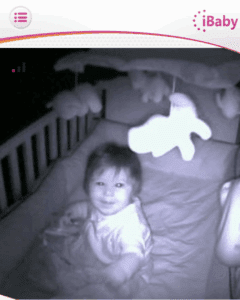 Other times, it totally ruined date nights as I watched my kiddo struggle with bedtime with grandma.
Fast forward to now, and bedtime monitors and baby wearables, are more the norm than not. 1 in 5 Canadians are wearing a sleep wearable right now. In fact, our night one support at Baby’s Best Sleep includes Wi-Fi monitor support. These technologies allow us to see what is happening in real time, which can be incredibly helpful and insightful.
For adults, some wearables can even serve as a first detector of sleep apnea, with fairly high reliability.
There are so many genuinely helpful ways these tools can be used. A client remarked last week that her baby wearable helped her sleep easier, knowing that if there were a SIDS-related concern, the device would alert her.
Yes. Yes. Yes.
But wearables and trackers also have a darker side that many people do not consider, and it is something I have been witnessing for the last 10 years in my clinical work. People often take these trackers as absolute gospel, when the technology simply is not advanced enough to live and breathe by our sleep data.
Even more concerning, sharing sleep data with people who do not fully understand it can actually be harmful. A recent study showed that our perception of how rested we feel can literally be influenced by what our trackers tell us. There is also a well-documented irony here. For some people, relying too heavily on wearable data can actually make sleep worse, creating a newer form of insomnia called orthosomnia.
For parents, this shows up in a really tricky way. Seeing that your baby was “awake” several times a night can make it feel like something is wrong, when in reality, normal healthy sleep includes multiple partial arousals, and even microarousals. Many parents have also reported watching their baby clearly awake while the monitor registers sleep, or the opposite.
So what do we do with all of this technology? Some of it is truly great, and some of it is not.
Truthfully, as someone who has worked clinically in sleep for almost 10 years, I can say this with confidence.
Watch your baby.
Trust your instincts.
Listen to your own body.
If you wake up feeling generally okay and rested, most days, then you probably are. And if you are reading this, you likely have a baby, so let’s be real. None of us are truly “rested.” Even then, do you really need a tracker to tell you your baby woke you up 10 times? You were there. You already know.
If you often not feeling rested, then a tracker can actually be useful as a starting point. You can use it to create a data trail to bring to your doctor, and advocate for the gold standard of care, a medical sleep study done in a lab.
But for now–if you sleep pretty well you are unlikely to need a tracker to tell you that.
And if your baby is happy, healthy, and otherwise well–the nanit doesn’t get to tell you they dont.
You’ve got this.
Other times, it totally ruined date nights as I watched my kiddo struggle with bedtime with grandma.
Fast forward to now, and bedtime monitors and baby wearables, are more the norm than not. 1 in 5 Canadians are wearing a sleep wearable right now. In fact, our night one support at Baby’s Best Sleep includes Wi-Fi monitor support. These technologies allow us to see what is happening in real time, which can be incredibly helpful and insightful.
For adults, some wearables can even serve as a first detector of sleep apnea, with fairly high reliability.
There are so many genuinely helpful ways these tools can be used. A client remarked last week that her baby wearable helped her sleep easier, knowing that if there were a SIDS-related concern, the device would alert her.
Yes. Yes. Yes.
But wearables and trackers also have a darker side that many people do not consider, and it is something I have been witnessing for the last 10 years in my clinical work. People often take these trackers as absolute gospel, when the technology simply is not advanced enough to live and breathe by our sleep data.
Even more concerning, sharing sleep data with people who do not fully understand it can actually be harmful. A recent study showed that our perception of how rested we feel can literally be influenced by what our trackers tell us. There is also a well-documented irony here. For some people, relying too heavily on wearable data can actually make sleep worse, creating a newer form of insomnia called orthosomnia.
For parents, this shows up in a really tricky way. Seeing that your baby was “awake” several times a night can make it feel like something is wrong, when in reality, normal healthy sleep includes multiple partial arousals, and even microarousals. Many parents have also reported watching their baby clearly awake while the monitor registers sleep, or the opposite.
So what do we do with all of this technology? Some of it is truly great, and some of it is not.
Truthfully, as someone who has worked clinically in sleep for almost 10 years, I can say this with confidence.
Watch your baby.
Trust your instincts.
Listen to your own body.
If you wake up feeling generally okay and rested, most days, then you probably are. And if you are reading this, you likely have a baby, so let’s be real. None of us are truly “rested.” Even then, do you really need a tracker to tell you your baby woke you up 10 times? You were there. You already know.
If you often not feeling rested, then a tracker can actually be useful as a starting point. You can use it to create a data trail to bring to your doctor, and advocate for the gold standard of care, a medical sleep study done in a lab.
But for now–if you sleep pretty well you are unlikely to need a tracker to tell you that.
And if your baby is happy, healthy, and otherwise well–the nanit doesn’t get to tell you they dont.
You’ve got this.
Other times, it totally ruined date nights as I watched my kiddo struggle with bedtime with grandma.
Fast forward to now, and bedtime monitors and baby wearables, are more the norm than not. 1 in 5 Canadians are wearing a sleep wearable right now. In fact, our night one support at Baby’s Best Sleep includes Wi-Fi monitor support. These technologies allow us to see what is happening in real time, which can be incredibly helpful and insightful.
For adults, some wearables can even serve as a first detector of sleep apnea, with fairly high reliability.
There are so many genuinely helpful ways these tools can be used. A client remarked last week that her baby wearable helped her sleep easier, knowing that if there were a SIDS-related concern, the device would alert her.
Yes. Yes. Yes.
But wearables and trackers also have a darker side that many people do not consider, and it is something I have been witnessing for the last 10 years in my clinical work. People often take these trackers as absolute gospel, when the technology simply is not advanced enough to live and breathe by our sleep data.
Even more concerning, sharing sleep data with people who do not fully understand it can actually be harmful. A recent study showed that our perception of how rested we feel can literally be influenced by what our trackers tell us. There is also a well-documented irony here. For some people, relying too heavily on wearable data can actually make sleep worse, creating a newer form of insomnia called orthosomnia.
For parents, this shows up in a really tricky way. Seeing that your baby was “awake” several times a night can make it feel like something is wrong, when in reality, normal healthy sleep includes multiple partial arousals, and even microarousals. Many parents have also reported watching their baby clearly awake while the monitor registers sleep, or the opposite.
So what do we do with all of this technology? Some of it is truly great, and some of it is not.
Truthfully, as someone who has worked clinically in sleep for almost 10 years, I can say this with confidence.
Watch your baby.
Trust your instincts.
Listen to your own body.
If you wake up feeling generally okay and rested, most days, then you probably are. And if you are reading this, you likely have a baby, so let’s be real. None of us are truly “rested.” Even then, do you really need a tracker to tell you your baby woke you up 10 times? You were there. You already know.
If you often not feeling rested, then a tracker can actually be useful as a starting point. You can use it to create a data trail to bring to your doctor, and advocate for the gold standard of care, a medical sleep study done in a lab.
But for now–if you sleep pretty well you are unlikely to need a tracker to tell you that.
And if your baby is happy, healthy, and otherwise well–the nanit doesn’t get to tell you they dont.
You’ve got this.
Whether you’re at the beginning stages of sleep training with your baby or you just want to improve your mental health as a parent, the sleep consultants at Baby’s Best Sleep are here to help.


© 2026 Baby's Best Sleep.
All Rights Reserved.

© 2026 Baby's Best Sleep. All Rights Reserved.